
Tiered Link Building: Is It Worth the Risk in 2026?
Tiered link building explained: how Tier 1 and Tier 2 links work, what Google says, the real risks, and safer alternatives.
Picture this. It’s 11 p.m., you’re a few coffees deep, and a forum post promises you can “10x your rankings” by building links to your links. The diagram looks like a ski slope for SEO money, and it’s easy to buy into it.
That’s the pull of tiered link building. It sounds like a clever shortcut, and the reality is more complicated. It isn’t magic, and it isn’t automatic doom. It’s a tactic with a few legitimate uses, plenty of ways to go wrong, and a reputation it mostly earned.
Let’s walk through it step by step, including the parts most guides gloss over.
What Is Tiered Link Building?
Layered link building means building links to the pages Who links to you, not only your own site. Each layer has a meaning. Pass authority over the chain, value a pyramid.
Picture a job application. A glowing reference from a respected former boss is your Tier 1 link. Now imagine several other professionals vouching for that boss. Those are your Tier 2 links, and they’re meant to make the boss’s recommendation carry more weight.
That’s the theory. Whether Google plays along is a different question, and I’ll cover it below.
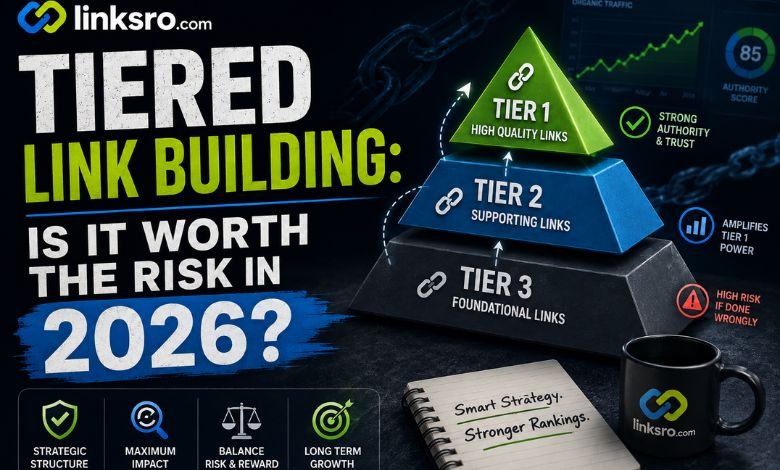
How the Tiers Break Down
Here’s the quick comparison:
| Tier | Points to | Typical source | Purpose | Risk level |
| Tier 1 | Your website | Relevant, authoritative sites | Direct ranking and authority boost | Lower if earned editorially |
| Tier 2 | Your Tier 1 pages | Blogs, roundups, newsletters, other mid-quality sites | Strengthen the pages linking to you | Moderate to high |
| Tier 3 | Your Tier 2 pages | Often low-quality or automated sources | Add volume to Tier 2 | High |
Quality drops as you move away from your money site, and that’s where trouble starts. Many guides treat Tier 3 as optional. I’d call it a hard pass.
Why People Try Tiered Link Building
Good Tier 1 links are hard to earn. You pitch, you wait, you get ignored, and you pitch again. Tier 2 links feel easier, because you’re promoting a page that’s already live and already links to you.
The pitch sounds great: don’t just get the link, fuel the link. Imagine you have a solid feature article that mentions your brand. You point a few extra links at it and wait for the magic.
What often follows is a lesson in patience. More links don’t equal better links, and nothing guarantees the extra layer does anything at all.
What Google Says About Tiered Link Building
Most people skip this part, so I’m putting it up front.
Google Explains link spam as a link to or from a site Mainly for manipulation search rankings. Note the word Basically: Google Judges your intent And your link patterns, Not the label you provide. The tactic. Google’s policy page doesn’t mention tiered link building by name. Some SEO publishers still argue that Google would treat it as a link scheme, which is how Google used to label this behavior. That’s their interpretation, not Google’s wording.
Google’s examples of link spam read like a checklist of common Tier 2 and Tier 3 tactics:
- Using automated programs or services to create links to your site.
- Low-quality directory or bookmark site links.
- Forum comments with optimized links in the post or signature.
Here’s what that means in practice:
- Google detects spam automatically. SpamBrain is Google’s AI-based spam-prevention system, and Google improves it from time to time.
- Most spam never reaches a human reviewer. Google states its algorithms find out most spam automatically and remove it from the results. Practically speaking, most of all common outcome This is the links Just terminate counting.
- Manual actions do happen. Google’s own policy says violations can lead to pages or whole sites ranking lower or not appearing at all, and a manual action for unnatural links can affect some or all of your site.
- Cleanup can’t undo the damage. After a link spam update, making changes might not generate an improvement, because any ranking benefit from those links is lost and can’t be regained.
In plain terms: if you build shaky tier backlinks and Google discounts them, fixing the problem later won’t restore your old rankings. You lose the money and the time.
A quick note On paid or modified links: Google Handles the buying and selling of links. A normal part of advertising and sponsorship. It doesn’t count as a violation when you qualify. The link with rel=” nofollow” or rel=” sponsored.” Whenever money or trade hands are accessible, qualify the link.
White Hat vs. Black Hat Tiered Link Building
This is where I have the strongest opinion.
Black- hat Provides level sharing the tactic its bad name. It relies on automation, spin content, throwaway blogs, and comment spam, mostly Tier 2 And Tier 3. Page One Power puts it bluntly: black- hat The tiering is there primarily for insulation. A money site All right, and no reputable SEO would recommend hiding it. Spam links. If your plan depends on bad links sitting far enough away that Google won’t notice, you already know how it ends.
White-hat tiering is far less glamorous. You really promote. Good Tier 1 page, Like a feature article, Computer study, or a resource page, And you serve real mentions to that page. He Tier 2 Links materialize from places where real people Click, like. A newsletter or a relevant roundup.
One more caution: The Tier 1 link itself can also cause problems. Google Keyword optimization list anchor text In paid articles, guest posts, or as a press release link spam. A paid or keyword filled one. Tier 1 placement is a weak foundation, no matter how refined. Your Tier 2 links look.
My gut-check test: If the site owner saw exactly how I got this link, would they be annoyed? If yes, skip it.
The Real Risks of Tiered Link Building
Penalties grab the headlines, but quieter costs add up too:
- Wasted budget. Boosting a mediocre Tier 1 page takes money away from building a better one.
- Obvious footprints. Unnatural anchor text, identical link patterns, And produce sudden spikes a backlink profile look Prepared
- Damaged client trust. If you are employed with clients, one poorly layered campaign can be wiped out. Years of goodwill.
- Lost opportunity. Many high impact tactics are deserved. Your time first.
How to Do Tiered Link Building Safely
If you still want to experiment, follow this cautious playbook:
- Start with a Tier 1 page worth boosting. Choose a high-quality, editorial placement on a relevant, real site, not a throwaway.
- Confirm Google has indexed it. Don’t amplify a page Google hasn’t picked up yet.
- Find editorial Tier 2 opportunities. Recognize link roundups, lists of related resources, and newsletters. Treat. Social promotion Seam a way to get the page Set, like not. A source of link equity, because social links often fail grade points.
- Keep volume low and anchor text natural. Slow and varied looks human. Fast and uniform looks like a script.
- Measure the importance. Track referral traffic, The indexing and ranking movement continues. Your target page, Not only raw link counts.
- Know when to stop. If a tactic needs constant justification, it probably isn’t working.
Notice What’s missing: automation, bulk submissions, and anything you will undergo embarrassing explaining to a client.
What If You’ve Already Built Tiered Links?
Don’t panic, and don’t blindly disavow everything. Google’s own cleanup steps for unnatural links are straightforward:
- Audit your links. Download your link list from Search Console and check it against Google’s link spam policy, starting with the sites that link most often or the links created most recently.
- Ask for removal first. Contact the site owners and ask them to remove the links or stop them passing ranking credit, for example with nofollow.
- Disavow as a last resort. Use the disavow tool only for links you couldn’t get removed. Google says blindly disavowing everything isn’t a good-faith effort and may get a reconsideration request rejected.
If you have a manual action, you’ll see it in Search Console’s Manual Actions report.
Better Alternatives to Tiered Link Building
In most cases, strengthening your Tier 1 strategy beats stacking more tier backlinks. Here are the options I’d reach for first:
- Digital PR and original data. Publish something worth citing, and links follow.
- Unlinked brand mentions. Someone already wrote about you, so ask for the link.
- Broken link building. Offer a useful replacement when a source goes dead.
- Strong internal linking. It’s underrated, free, and fully in your control.
- Page improvements. A better page earns better links and keeps them.
Tiered Link Building FAQ
Is tiered link building still effective?
Google doesn’t confirm any benefit, and most claims come from anecdotes rather than hard evidence. The risk-to-reward ratio looks poor next to other tactics, especially when the links are low quality.
Is tiered link building safe?
Only a careful, editorial version comes close. Automated or spammy approaches risk being discounted or hit with a manual action.
What are Tier 2 links?
Tier 2 links point to the pages that link to your site. They exist to strengthen those pages.
How many tiers should I build?
If you try it at all, stop at Tier 2. Tier 3 adds the most risk for the least return.
Key Takings
- Here’s the honest takeaway on tiered link building: it looks like a shortcut, but it rewards restraint and punishes corner-cutting.
- The tactic isn’t forbidden magic. It’s just rarely the best use of your time.
- Build one great Tier 1 link. Support it with a few genuine Tier 2 links. Apply accordingly.
- Your remaining energy But content people Do you aspire to refer to? If you only remember. One thing from this guide, do it.
Additional Resources
- Google Search Central: Spam Policies for Google Web Search. The primary source for what counts as link spam. https://developers.google.com/search/docs/essentials/spam-policies
- Google Search Central: Spam Updates and Your Site. Explains SpamBrain and why link spam recovery is limited. https://developers.google.com/search/docs/appearance/spam-updates