
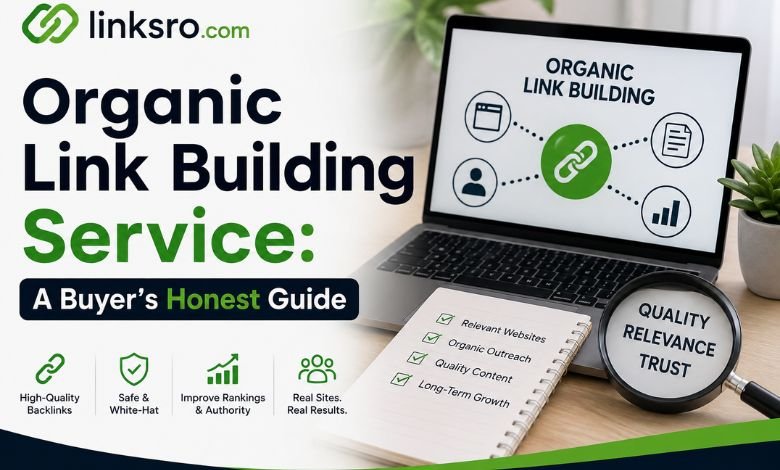
Organic Link Building Service: A Buyer’s Honest Guide
Thinking about hiring an organic link building service? Learn what it involves, which red flags to avoid, and how to judge the results.
A small online shop owner recruits a vendor who promises dozens of backlinks a month. The dashboard fills out exactly as advertised, and the owner feels like a genius. Then downgrade. A few weeks later, that crater.
The owner just bought it the SEO equivalent of a fake Yelp review, and Google was not deceived. It is a view worth understanding before signing anything.
If you shop. An organic link building service, I desire you to depart it. Expensive lesson.
What Is an Organic Link Building Service?
An organic link building service Gets backlinks from real websites because your content, Brand or expertise deserves. A mention. No one pays for ranking credit. And nobody Trading links. A sketchy swap.
Think about it word- of- mouth marketing. A great restaurant doesn’t compensate for people who recommend it. Diners Recommend This is because the food is the best. A good service helps to find people. Your brand And articulate about it.
In practice, the work usually includes:
- Outreach: Pitching useful content, data, or expert commentary To relevant publications
- Digital PR: To give to journalists a reason For your reference
- Link reclamation: Conversion of unlinked brand mentions to links
- Linkable assets: Building tools, research and guides that people Do you pursue to refer?
Plenty of agencies use “organic” as a buzzword, so the label alone tells you little. Judge the method, not the marketing.
Why Does “Organic” Matter More Than Ever?
Google has been blunt about this. Its spam policies Explain link spam as a link to or from a site Mainly for manipulation search rankings. Examples include excessive link exchanges, Utilize of automated programs to create links and exchange capital, goods or services for links.
Enforcement keeps improving. Google’s 2022 spam report said SpamBrain detected 50 times more link spam sites after the December 2022 link spam update than after the July 2021 one. The pace hasn’t slowed since. Google released its third spam update of 2026 in August. Reporting indicates the earlier 2026 updates were not aimed at link spam specifically, but the systems that catch manipulative links keep learning. One agency’s review of Google’s updated policies reached a clear conclusion: SEO shortcuts lead to penalties, while quality content and ethical link building last.
The risk goes beyond penalties. When a link spam update neutralizes bad links, Google says making changes afterward might not generate an improvement, because the ranking benefit those links provided is lost. You can pay for value that quietly disappears.
Does Google Ban Paid Links Entirely?
No, and the details matter. Google says buying and selling links is a normal part of the web’s economy for advertising and sponsorship, and isn’t a violation as long as the links carry a rel=”nofollow” or rel=”sponsored” attribute. The problem is paid links that pass ranking credit.
Guest posting works the same way. Google doesn’t ban it. It flags advertorials where payment buys links that pass ranking credit, and links with optimized anchor text in guest posts or press releases distributed on other sites. That’s why an organic service focuses on earned editorial mentions. They carry the least risk. You can read Google’s for the technical details.
How Does Organic Link Building Differ From the Shortcuts?
Most people searching for link building help are choosing between two philosophies. This table shows the difference at a glance:
| Organic approach | Shortcut approach | |
| Where links come from | Real, relevant sites with real audiences | Link networks, farms, and mass-produced guest post placements |
| How links are earned | Value: content, data, expertise | Payment for ranking credit or reciprocal swaps |
| Pace | Gradual and compounding | Fast, then fragile |
| Risk | Lower | Rises with every spam update |
| Reporting | Placements, relevance, traffic, conversions | Link counts and vanity metrics |
Quantity isn’t the point. One enterprise SEO writer reports Discern sent thousands of outreach emails per quarter The state still had fewer quality placements from a focused 200- prospect Campaign production. He one practitioner’ s observation, Not an universal rule, but it fits. A simple logic: related, targeted outreach The volume tends to hit.
What Does a Good Organic Link Building Service Actually Do?
Here is the process I’d look for.
1. It starts with an audit, not a package.
A good service reviews your backlink profile, your best pages, and your competitors before it promises anything. If a vendor quotes “20 links a month” without looking at your site, walk away.
2. It prioritizes the right pages.
Resources are finite, so a smart service picks its targets. notes that, at large companies, teams find the most buy-in for link building around the products or pages they most want to improve. That comes from an enterprise context, but I’d apply the same logic to any site: commercial pages and your strongest content come first.
3. It builds assets worth linking to.
Outreach only works when you have something worth citing. A great pitch can’t rescue weak content.
4. It runs real, personalized outreach.
The best campaigns read like a note from a human who read the other person’s site. That’s because a human wrote them.
5. It mines what you already have.
Other sites may already mention your brand without linking to it. Reclaiming those mentions is some of the cheapest, fastest work in the field, and lists link reclamation among its recommended enterprise tactics.
6. It reports on outcomes.
Links matter because of what they do: rankings, organic traffic, leads, and revenue. A strong service ties its work to those numbers.
What Should You Know About Link Building Websites?
When you start researching, you’ll run into plenty of link building websites: marketplaces, directories, guest post platforms, and vendor catalogs. Some help with research. Many simply sell placements, and placements sold to pass ranking credit are exactly what Google’s spam policies target.
Before you pursue a link from any site, ask three questions:
- Does it have a real audience, or just a “write for us” page?
- Does it relate to my industry or topic?
- Would I want this link even if search engines didn’t exist?
If you can’t answer yes to the last question, the link is probably a liability.
Which Red Flags Should You Watch For?
These warning signs deserve the most attention:
- Guaranteed rankings or link counts. Nobody controls Google.
- No named sites. If a vendor won’t show example placements, those placements probably won’t impress you.
- Rock-bottom pricing. Real outreach takes human time. Prices that look too good often signal a network.
- Exact-match anchor text everywhere. Google specifically flags optimized anchor text in distributed guest posts and press releases. Natural citations use varied wording.
- Vague methods. “Proprietary process” shouldn’t mean “we won’t tell you what we do.”
Ask any vendor directly how it acquires links and whether any are paid. A trustworthy answer is detailed and a little unglamorous.
How Long Does Organic Link Building Take?
Takes longer than you aspire. Timelines Unique with your competition and starting factor, but in many campaigns primary signals appear within. A few months: Better placements, brand mentions, and referral traffic. It usually takes longer to achieve. A meaningful rating.
Link building compounds, e. G a retirement account. Initial deposits are negligible, but leave out the initial costs. The most. A search industry session on enterprise link building made the same point: Success takes longer, long- term strategy And not once for that quick links.
Should You Hire a Service or Build Links In-House?
The answer depends on your resources.
- Internally, it works when you are. Your team has outreach skills, Timeframe etc strong content to promote.
- A service works when you lack bandwidth or experience. It is also suitable when you require results without the work. A full team.
- A hybrid model works well for many teams. You can manage. Content and expertise, and the service handles outreach and relationships.
Whichever route you choose, own the strategy. Delegating tasks is fine. Delegating understanding gets expensive.
Frequently Asked Questions
What is an organic link building service?
It’s a service that earns backlinks through outreach, digital PR, reclamation, and linkable content, without paying for ranking credit or using manipulative schemes.
Is organic link building safe?
It carries far lower risk than shortcut tactics when done properly, because it avoids what Google’s spam policies target. No link strategy is risk-free, though, so vet your vendor carefully.
Does Google allow paid links?
Yes, if they’re qualified with rel=”nofollow” or rel=”sponsored”. Paid links that pass ranking credit violate Google’s spam policies.
How do I know if a service is truly organic?
Ask for example placements and a clear description of its methods. Confirm that it doesn’t pay for ranking-credit links or trade them.
How many links do I need?
No universal number exists. Relevance and quality matter far more than volume, and the right target depends on your competitors.
Key Takings
- Links are earned reputation, and nobody can rush or fake reputation for long.
- Shortcuts feel like wins right up until they stop working, and Google’s own documentation says some of that lost value never comes back.
- If you are considering an organic link building service, Seek transparency, relevance, and patience.
- Solicit hard questions, expect slowness. Compounding results, and treating any promise of instant wins as your cue to leave.
Additional Resources
- https://developers.google.com/search/docs/essentials/spam-policies: Google Search Central: Spam policies for Google web search. The primary source on what counts as link spam, including the rules on paid links.
- https://developers.google.com/search/updates/spam-updates: Google Search Central: Spam updates and your site. Explains how spam updates work and why link spam recovery is different.